

Maya C. Popa: An Interview
A Q & A with the poet and founder of Conscious Writers Collective.


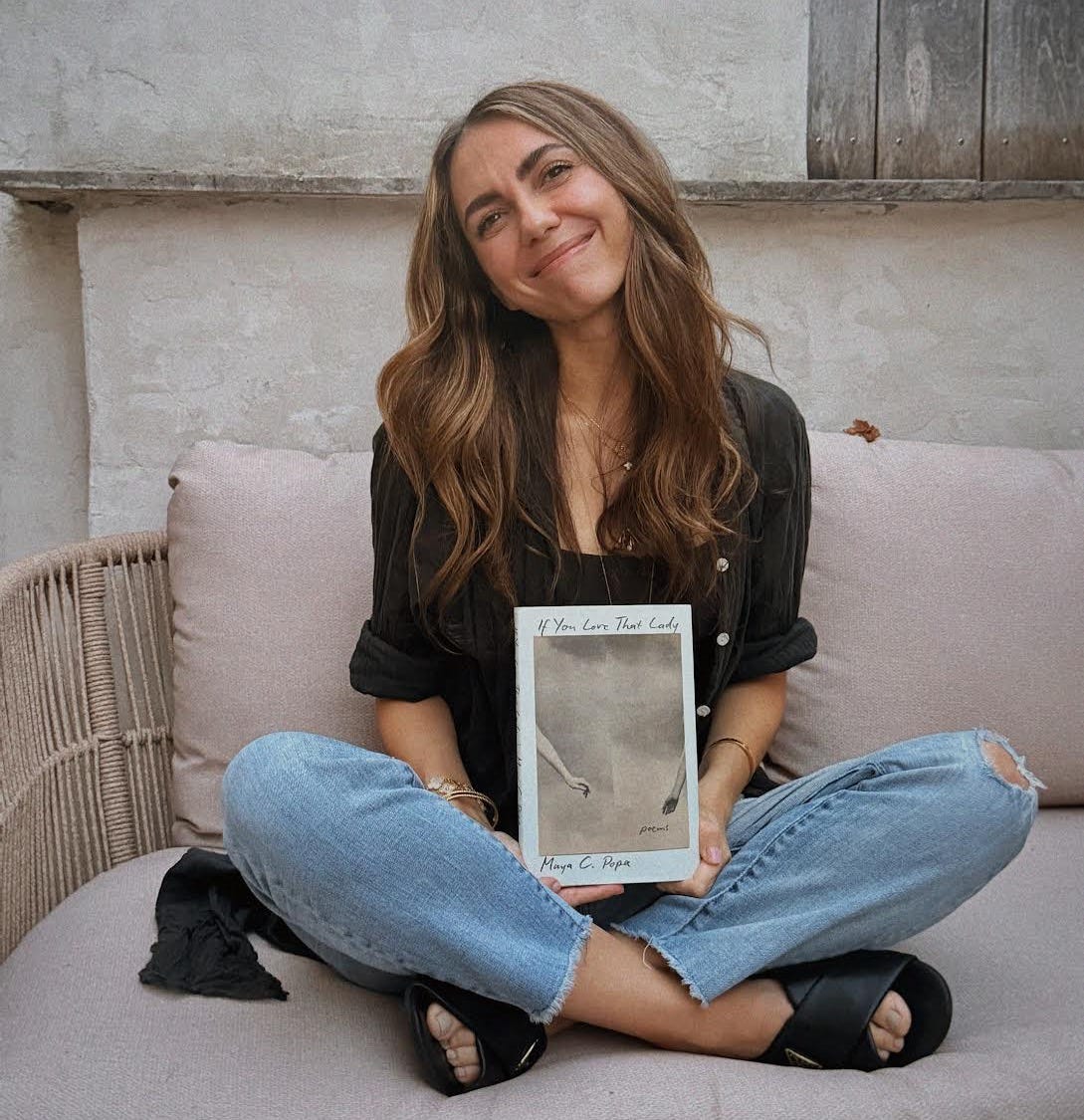
It took five years to write, from its earliest poems to the final one (”I Was the Beloved,” which opens the second section). It would not be the same book without that poem, and I could not have written it any sooner. I had to live my life long enough to hear it and to recognize the subtler themes the book had been circling.
Dear Friends,
Today, I have the special honor of bringing you my conversation with Maya C. Popa.
I’ve known Maya for more than two years. I met her through Substack, where I found her sublime poetry and essays, along with the works of other poets she shared in twice-weekly posts. Soon after that, I became one of the original members of her Conscious Writers Collective. (Click on the links below to find out more.) Through Maya’s workshops, guest speakers, and the phenomenally talented and engaged members of the CWC community, I’ve learned more about writing than I did through my MFA program and years of self-guided learning and occasional classes.
If someone asked me to describe Maya, the first words that come to mind are “force of nature.” She’s one of the kindest, most generous people I’ve had the good fortune to know. At age 37, she’s accomplished more than most of us could only dream of achieving over the course of several lifetimes.
A more formal bio:
In addition to a PhD on the role of wonder in poetry from Goldsmiths, University of London, she holds degrees from Oxford University, New York University, and Barnard College. She’s the recipient of numerous literary awards, including the North American Book Prize for American Faith (Sarabande, 2019). Her second collection of poems, Wound is the Origin of Wonder (W.W. Norton, 2022) was named one of the Best Books of Poetry by the Guardian.
Maya is poetry reviews editor of Publishers Weekly. She teaches creative writing at NYU, writes a bestselling Substack, and is the founder of Conscious Writers Collective, a top-ranked global online writing community. The poems in her most recent collection, If You Love That Lady (W.W. Norton, 2026) draw from nineteenth-century courtship letters to investigate longing and its consequences, desire and restraint, and the ways in which our lives are opened and revealed by loss. Set in a museum, “Memento Mori” defines the book’s central challenge:
“How much pain / should we knowingly invite— / the gallery says all, and all at once.”
All, and all at once. Life is not for the faint of heart.
Please welcome Maya C. Popa.
Maya, you have a brilliant career as a poet, teacher, and in publishing. You’re currently poetry editor at Publishers Weekly. Your third book of poems, If You Love That Lady, published by W.W. Norton, was released this week. Authors Elizabeth Gilbert, Robert MacFarlane, and Gabrielle Calvocoressi praise the book as “a gem”; “forged and honed, polished and gleaming,” and “an exact and exacting scintillation of thought and image.” Poet and novelist Ocean Vuong describes you as “One of my generation’s finest poets – a truly peerless voice.” You’re 37 years old. When do you sleep?
Thank you so much, Mary. I greatly admire your writing and am honored to be in conversation with you.
I always remind writers that book jacket copy and event bios are the highlight reel. No one sees the requests for blurbs that went unanswered (it happens with every book), the years of rejections before acceptances at certain journals, or the many false starts. I emphasize this often because I think there’s an enormous amount of unnecessary comparison in our field, and it can be discouraging for people just starting out, as well as for longtime veterans. We all benefit from being honest about the perseverance, uncertainty, and persistence it takes to publish books.
As for sleeping and eating, they’re my priorities. I can’t teach or steward anyone else’s writing if I’m running on fumes. Where I make concessions is usually socializing—I’m in bed very early, so if we’re having dinner, it will probably have to be at 5:30 p.m.
You write a newsletter on Substack and regularly send out curated poetry selections. Once a month, you host a book club, Poetic Commons. When did you begin writing on Substack, and why? What aspect of the platform appeals to you most?
The platform has changed in the three-plus years I’ve been on it. What I appreciate most today is that I can still have fascinating conversations in the comments, where I get to hear readers’ reactions to poems that are often both affecting and deeply thoughtful. Those exchanges matter enormously to me.
I’m also endlessly grateful not to be pitching essays. When I have stretches of free(er) time, I can simply write about whatever has captured my attention, whether that’s “Raising the Ambition of Your Writing“ or “Wordsworth, Coleridge, and Childhood.” It would be difficult, if not impossible, to find homes for these as standalone essays in literary journals—they’re often either not lyrical enough or not occasional enough. Like so many writers, I’m grateful for the flexibility and freedom the platform offers.
You’re the founder of Conscious Writers Collective, an online literary campus and platform that was ranked one of the top online writing programs worldwide in 2026. What made you decide to take on this project, and how long before it was realized?
I’m glad you asked, because the lead-up time was significant and, I think, essential to building CWC not simply as a founder-led community, but as an institution. I spent two years researching and planning; my biggest challenge was figuring out how to create the kind of experience I envisioned without spending $100,000 on building a platform from scratch. I was fortunate during that time to be invited to guest teach in an online writing community that used Circle as its hosting service. Once I saw how customizable it was, I started the implementation phase.
The first year felt very much like building the plane while flying it. You were there for that year, Mary. I had no support staff and was doing everything myself—from creating graphics and scheduling events to designing the curriculum I taught and coordinating with every visiting writer. Eventually, I brought on part-time support, and last year, in our second year, I hired two exceptional writers to join the team: Trevor Ketner, a National Poetry Series winner who has worked at Poetry and Graywolf, and Elaine Greenwood, an outstanding emerging poet with a background in arts administration who has done extraordinary work building literary community in Arizona. They make it possible for me to focus on what should be my primary role: designing our curricular pathways and collaborating with writers and institutions to offer CWC writers the greatest value and resources of any program online.
How does collaboration figure into what you try to do?
It’s central to my vision of literary programming. My goal was always to build something democratic, global, and genuinely supportive of the broader literary ecosystem.
CWC collaborates with Five Things, which shares our commitment to bringing exceptional teachers to online audiences. We also partner with degree-granting MFA programs that recognize the caliber of our programming and welcome CWC writers to MFA low-residencies. We have one coming up at HFU in Philadelphia in a few weeks. Our poets will study alongside MFA students, learning from Joy Priest, Adrian Matejka, Erin Belieu, Kevin Prufer, and other amazing teachers. This December, CWC will host a four-day poetry residency at the wonderful Ragdale Institute. We will also have a booth and offsite reading at AWP in 2027.
Last year, we awarded $15,000 in scholarships. As someone who attended both college and graduate school on scholarships, expanding access to literary education is deeply important to me. Our CWC Bookshop also partners with Indy Reads, an independent bookstore in Indiana whose mission aligns closely with our own.
Long term, my vision is for CWC to become an engine for the literary ecosystem that helps fund presses, book prizes, and other initiatives. In 2027, we’re significantly expanding our core faculty, bringing more extraordinary MFA professors into our workshops while creating meaningful opportunities for writers to develop as editors, teachers, and facilitators.
The list of guest teachers in CWC is stellar. It includes Jane Hirshfield, Jorie Graham, Ellen Bass, Andre Dubus III, Garth Greenwell, Robert Macfarlane, Meghan O”Rourke, and U.S. poet laureate, Arthur Sze. That’s only a start! Top editors, agents, and publishers discuss the business side of writing. You host workshops, office hours, lectures, and more. CWC members have access to full vault of past recorded sessions and classes, like a Netflix library. Yet, your rates are a pittance compared to the cost of an MFA. How do you manage to deliver such value?
Again, thank you, Mary. By the end of 2026, we will have hosted almost 70 visiting speakers in one year.
My dream has always been to build a reference library that writers can turn to at any hour and find exactly the class they need. With that in mind, my goal this year was to invite as many exceptional writers, editors, and publishers as possible to help create a truly comprehensive course vault in both poetry and prose.
Looking ahead, I’m especially excited about our September through December prose programming: a ten-part fiction intensive led by the genius writer and developmental editor, Jennifer Lauck. It will be thirty hours devoted to writing the novel from concept through revision. I can’t wait to see how this transforms our novelists’ drafts. I also have a strong feeling that, with this kind of foundational instruction, our poets will surprise themselves.
In 2027, our new core faculty will begin leading full quarters, including not only craft classes but office hours and workshops. This shift is important to me, because I never want my voice to be the dominant one. I have my own pedagogy and approach, and I’m deeply grateful for the trust, generosity, and friendship I’ve experienced from our nearly 400 members. But this isn’t my community—it’s yours, and it’s ours. CWC was built by a writer for writers, and it should reflect a wide range of aesthetic approaches, teaching styles, and artistic philosophies. The truth is that I’ll be in the room as a student next year—I’ve invited Pulitzer Prize, NEA, and Guggenheim fellows to teach long-term, because I want to keep learning alongside our members. And I’ll continue to oversee the curriculum and shape the overall vision for the program.
In your writing practice, revision is central. You withheld the publication of If You Love That Lady for a year because you felt it wasn’t ready. How do you maintain your high standards and integrity in a demanding marketplace?
It absolutely is central, and I know that can be confronting to some writers, who feel I place too high a premium on revision. But how could I know its value if I hadn’t once been someone who under-revised? The more confidence I’ve gained in my work, and the more I’ve discovered what I’m capable of writing when I give myself the necessary distance and clarity, the less eager I’ve become to submit quickly or seek external validation. Today, I trust that my eighth or ninth draft will uncover something my third couldn’t see yet.
And, yes! My editor at Norton asked if she could see the manuscript, aiming for a 2025 potential release. I said no, which was slightly terrifying at the time. I just knew the book needed more time. It took five years to write, from its earliest poems to the final one (”I Was the Beloved,” which opens the second section). It would not be the same book without that poem, and I could not have written it any sooner. I had to live my life long enough to hear it and to recognize the subtler themes the book had been circling.
Despite your work having appeared in a number of top literary journals, you submitted to The New Yorker for twelve years before they accepted two of your poems. How did that feel?
It felt entirely appropriate, if I’m being honest. I was never submitting with the expectation of acceptance. More often than not, I reached the one-year mark and withdrew the poems before hearing back, so I didn’t even receive a rejection! I know the numbers and the odds. Publication there is, in many ways, a lightning strike. Exceptional, award-winning writers—as we know from our CWC visit with the New Yorker editor a few months ago—are rejected all the time.
Having two poems appear in The New Yorker in the same year was an astounding gift, especially as they’re two of my favorite poems that I’ve written. I also believe they’re among my strongest work. But, as with everything in this field, success is some combination of craft, persistence, subjectivity, timing, and sheer luck.
The best part by far was seeing my parents, Romanian immigrants who settled in New York in the 1980s, so excited. I’m forever grateful to The New Yorker for giving them that joy.
Thank you so much, Maya, for taking the time to speak with us today. I’m honored that you’re here.
I hope you’ll subscribe to Maya’s Substack and think about joining Conscious Writers Collective. (There’s a “Taste Of” trial available through the website that offers you seven-days for free—how great is that!)
Maya’s third collection, If You Love That Lady, is out from W.W. Norton now.
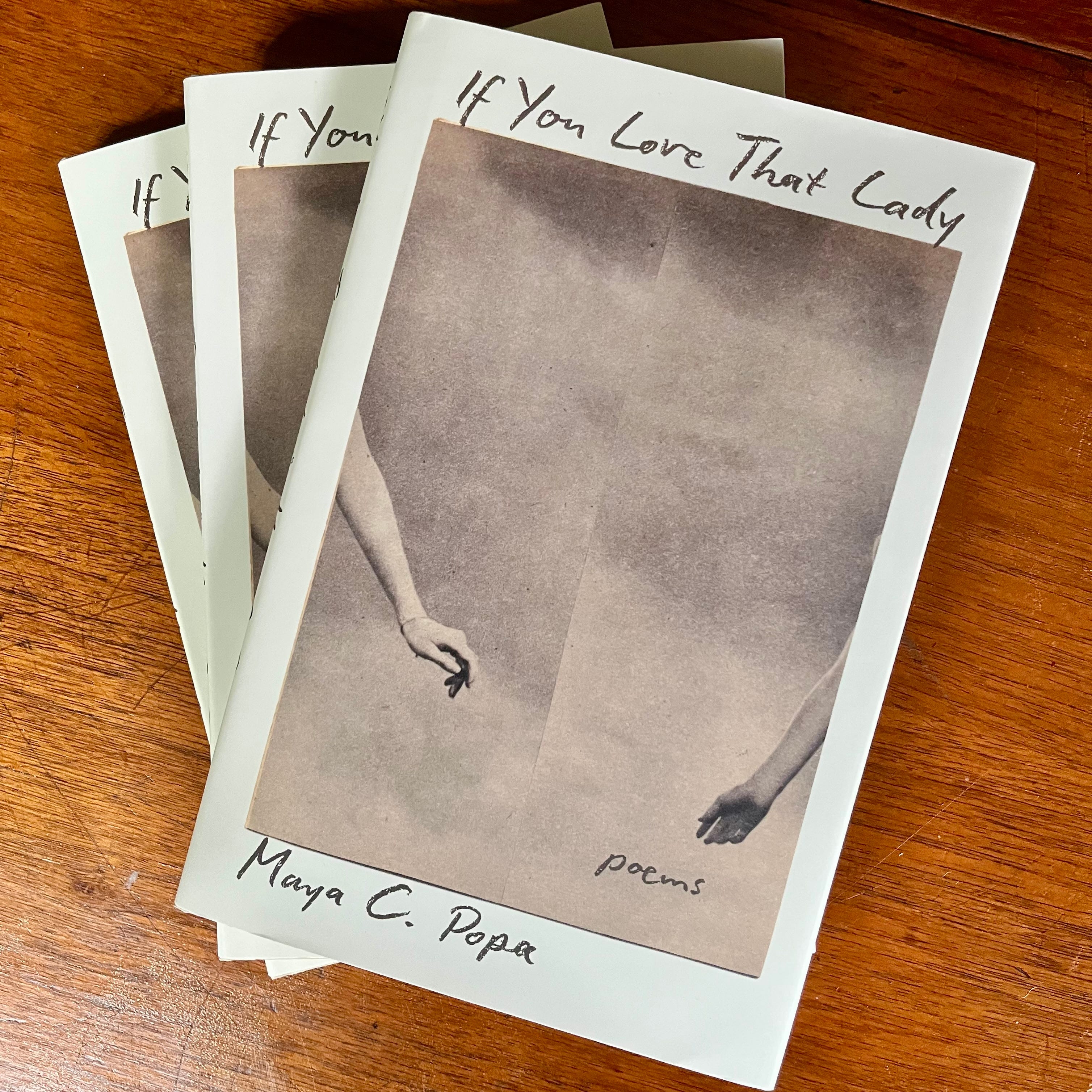
I am offering three copies of If You Love That Lady to readers of this week’s interview with Maya C. Popa. If you want one — of course you want one! — please leave a note in the Comments. I will draw names, and announce the winners next Sunday, August 2.
If you’ve been enjoying Writer, Interrupted for awhile, please consider becoming a free or paying subscriber. At this time, all of my work is offered for free. But if you have the resources, your financial support helps me continue to bring you my essays, interviews, and occasional round-ups and reviews. I promise to send only my very best work.
Wishing you a great week,
Mary xo
 | A guest post by
|
So grateful as ever for the chance to speak with you, Mary. xx
What a treat to hear, simultaneously, the voices of two Substack favorites discussing a stunning new book, great poetry and an exceptional literary program!
Having already devoured my own copy of "If You Love That Lady", I encourage readers to add their names to your lottery to win the experience of exquisite writing and meticulous craft... or go buy this beauty of a book!
Now... how do I enroll for that four-day poetry residency at the Ragdale Institute?!?!?!